

 Longmont, CO
I just read that, if you want to keep your bay leaves flavorful longer, you can store them in the freezer and they’ll last for years. This seems to suggest that these little turtle shell shavings had flavor, to begin with.
They are hard to describe, given that they have no discernible taste or smell or definable color. But the ubiquitous bay leaf was on my mind recently during a discussion of survival, initiated by our seventh-grade son who is studying evolution and natural selection. Certain animal features, he explained, if useful for survival, not only return in future generations but are improved upon. I was cooking and started to wonder, exactly what about the bay leaf caused it to not only stick around for millennia but to make it into nearly every recipe ever written.
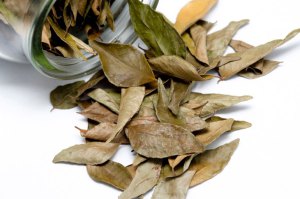
A parody of itself – a dry, odorless, bit of shuck – the bay leaf is stored importantly in a spice jar and portioned out in one or two-leaf quantities as if it imparts something of palate-redeeming quality. It sits there in its little airtight container, all ashy and non-descript, just daring you to empty all eight leaves into the pot. But then, adding to its lofty facade is that no recipe ever calls for half a leaf or eight leaves, just one or two. You do not shake, pinch or crumble the bay leaf. You don’t “add bay leaves to taste,” or “saute until aromatic,” (as either event would have you die of old age first). I’m not convinced that bay leaves don’t just suck all the flavor out of every other spice in the pot.
One theory I have cooked up for its survival and propagation is that during natural selection nothing selected the bay leaf. They were left to just thrive on and, not even of interest to insects, someone decided that before the human species be overtaken by this weed, we needed to find it a purpose. Thus we have “E-v-e-r-y SOUP gets a BAY LEAF” mentality among recipe developers.
As an avid conspiracy whore, my other theory is that bay leaves are the product of people like me who are simply incapable of sustaining plant life. Some genius realized that millions of supermarket saplings are going home every single week to their imminent deaths and surely there must be a use for the plant carcasses. So he or she created a way to harvest the crispy dead foliage from across the land, slap it in a bottle and sell it to McCormick or Spice Island. The plant murderers then buy it back in the form of an essential spice, not to be left out of any sort of stew, soup, sauce, broth, goulash or bouillabaisse
Like tofu, bay leaves add nothing and you don’t miss them when they’re not there. They’re not leaf enough to qualify as fake marijuana in drug deal scams – that is for the truly leafy dried greens like parsley or oregano. Bay leaves are not even used in kindergarten art. Yet, we all have a decades-old plastic bottle of the flavorless brittle green shards in our kitchen spice cabinet. Bet you’ve got one, and I bet you’re not sure why.
It begs the question, where do these potpourri rejects even come from? Be honest, nobody you know has grown or harvested bay leaves from their orchard. Or does it come from a bush? Tree? Vine? Or stalk? For all we know, they sprout in those little plastic bottles. For all we know, they are the leaves removed from Twiglets, that odd British snack favorite that looks and tastes like twigs but suspiciously, without leaves.
You won’t find them in the bathroom. We ladies are not gracing our bathwater with bay leaves. Nobody is cooking them down for their essential oils – they are dry and brittle as elephant lips. They are nature’s paint chips. Unlike discarded paint chips, however, this fauna-wannabe has a purpose, thanks to some kind of collusion between the spice companies and the people who write recipes. Its purpose seems to be elevating regular cooking to cauldron boiling.
If you watch a witch tend to a cauldron, (as I’m sure you have), you’ll note that the items she’s launching into her big black pot have way more substance than our human recipes of the ‘pinch’ and ‘dash’ ilk. She’s got tree bark, scales, eyeballs, and entire small reptiles. We have the bay leaf, which, by its size and wafer-like crispness confers a level of import far greater than our onion powder and parsley flakes shaken out of special lids. The fact that you only add the one or two bay leaves, conveys worrisome potencies unknown. It makes you feel powerful though until you realize it packs less wallop than a used bandaid.
If you have ever eaten a sauce or a gravy to which the cook neglected to add a bay leaf, well, nevermind. You’d have no way of knowing. If the cook, in a rash, booze-induced act of c’est la vie added more than two, well, also you wouldn’t know.
Dry and with less tang than a scab, the only way a diner can tell if their sauce or gravy has been inflicted with one or more bay leaves is if the chef has forgotten to remove it and you end up with the bit of bark in your mouth. At which point you will find that it cannot be chewed, dissolved, rolled, folded or washed down your throat. Your only option is to remove it from your mouth and set it down next to your plate where you won’t make the mistake of re-eating it.
In the history of cooking, nobody has ever run to the store on discovering they were out of bay leaves. Nobody has ever gotten nostalgic for mom’s kitchen upon smelling one stewing. Nobody, in the history of eating, has ever gotten bay leaf stuck in their teeth. Lay’s potato chips in their many rounds of flavor competitions have yet to name and flavor a chip with “bay.”
Still, every soup, sauce and stew recipe calls for a bay leaf, and we all dutifully add the bay leaf. Each time, we wonder “what’s it for?” then put it in anyway because things in recipes are there for a reason. They are each essential in ways we don’t know, but most at least produce a smell or eventually lend enough substance to the meal for a fragrant fart. We chalk it up to the fact that we are but poseurs, nubes imposing our best acts of mimicry in the kitchen. We just really have no clue. We throw in the bay leaf and simmer.
Oh, bay leaf, what is the point of you? Well, on the off chance that this is an attribute, it’s only fair to mention that the bay leaf is indestructible – and immune to organic decay.
This research involved the same son mentioned earlier, who, albeit unwittingly, took homemade soup to school one day and several weeks later brought back the Tupperware container. The composting process was well underway for all of the soup remnants, except the bay leaf. It was neither waterlogged, mushy nor discolored and had not even broken down around the veins. In one piece, it clung heartily to the plastic side of the container, no doubt waiting for a bit of a rinse and the chance to swim in another pot of broth. Surely your average arugula, so jam-packed with aroma and earthy piquancy could not boast such stamina. Too busy having a point.
Someone somewhere is laughing heartily as we daftly toss something with less to offer than a toenail into our soup, steeping it vigilantly because it’s what we were told to do. They chuckle as we shriek halfway through the simmering time, “Aaack! I’ve forgotten the bay leaf! I wonder if it’s too late to put it in – should I start over, add an extra?!”
Despite flowery Wikipedia entries describing the haughty bay leaf as possessing ‘distinctive flavor’ and, ‘fragrance,’ I am unconvinced. I don’t understand how such an unpalatable little anti-spice is still around. Nevertheless, there will be water flavored with bay leaf someday and mark my words it will taste – like water. Marketers will then need to decide which health benefit to ascribe to the bay leaf H2O. Perhaps, absorbing its properties will make you brittle and misunderstood.
Remember, not even Simon and Garfunkel selected the bay leaf – “Parsley, sage, rosemary and bay leaf?” No. But somehow, it’s survived, we have ample quantities, we blindly use them as directed, and for as long as that’s true, Mother Nature will always make them available. In little airtight jars.
Before you know it, the talentless little yuck wafers will get their own reality TV show. Because, Paris Hilton, Logan Paul, and Kim Kardashian. Nobody is sure what they actually do, but they are a household name and get invited to all the good parties. Maybe it’s their fragrance. If they can do it, so could the bay leaf, an overrated husk, a weightless waste of kitchen real estate whose origin is a complete mystery and whose talent has yet to be identified. But, as we’ve all got a jar of bay leaves in our kitchen, it’s probably just one seedy YouTube vid from spice rack stardom, self-labeled ‘merch’ and the new series, “Keeping Up With The Bay Leaves.”
 The Overhead Bin
Leave a comment