

by dana gonzalez 2020
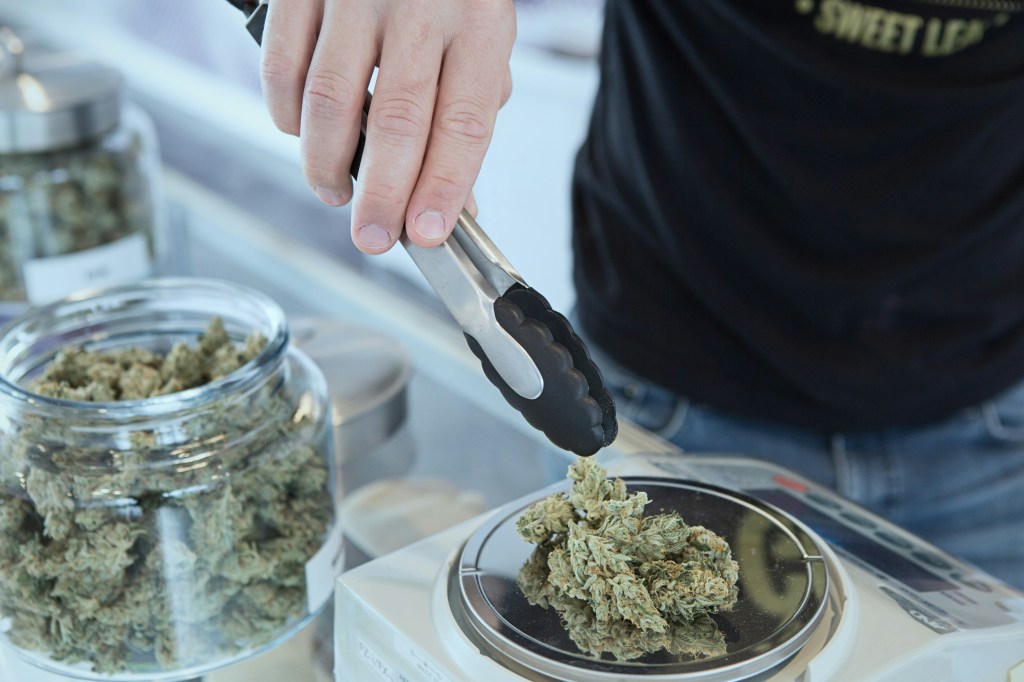
And we thought cannabis was just for getting high. It is if you’re talking about the chemical Tetrahydrocannainol (THC), one of 110ish cannabinoids produced in the cannabis plant. This would be the product of cannabis sativa or cannabis indica that we refer to as marijuana, known for producing high quantities of THC, its psychoactive compound. It produces intoxicating levels of THC, actually, and is called by many names, including hash, ganja, dope, weed, bhang, bud, dank, mary jane, pot . . . the list goes on. It’s contained in the sort of chrystalised offshoot, or “bud” of the plant.
“Old-school” marijuana, considered a “gateway drug” survived the American War on Drugs to see legal status in many states today, where it is sold in specially licensed “dispensaries.” Unlike the seedy buds bought and sold on the black market of yore, the refined product on the legal market today is specially cultivated, and in some cases processed to be ready for use as bud or flower, edible, or concentrate. It’s heightened psychoactive potency relative to the pot of the past is deliberately nurtured for a variety of impacts – specialized “highs” – and branded, bearing names such as Kind Concentrates, Dosist, Seven Point, Siskiyou Sungrown, THC Designs, all of which is grown and sold out of states where the plant has been legalized.
While a middle aged person today might recall bongs, joints, pipes, soda cans or even apples, the savvy marijuana consumer of the 21st century is likely smoking a blunt, vaping, eating or vaporizing THC concentrate in a “dab rig.” Gone are the days of Cheech and Chong, Fast Times and Monty Python, yet the celebrated herb known most commonly as “pot” is still pot and designed to get you high. It turns out, however that the plant from which it comes has much more to offer. This industry is truly soaring.
While pot/marijuana/weed is gaining legal status in many states of the US, hemp and hemp-derived products are legal across the board, allowing new research into cannabis as well as mass production of the cannabis crop. Hemp is a strain of cannabis with less than .3% THC. Now, stay with me here, because this is where it gets important;
Marijuana’s cousin, Hemp, once a prevalent crop in the US until 1937 when the Marijuana Tax Act all but shut the door upon (and only recently begun to creak back open), is a hard-working species of vegetation used in rope, textiles, clothing, shoes, food, paper, bioplastics, insulation, and biofuel. As it turns out, it is also a source of hundreds of compounds beneficial to human health. Hemp contains very little THC, i.e. not in high enough quantities to get you swaying to Led Zepplin. Still, as cannabis, it boasts all of the healing properties of “pot” that are now available for study, cultivation, extraction and use.
Of the cannabis plant’s reported multitude of health benefits, you’ve probably now heard of CBD. It’s short for CANNABIDIOL, a non-intoxicating anti-inflammatory component of cannabis. Known for its positive impact on insomnia, anxiety and chronic pain, CBD has been a trending result of research into the phenomenal components of the cannabis plant – both the marijuana and hemp strains. It’s key feature is that it delivers these benefits without the intoxicating effects of THC.
You can now buy CBD-containing lotions, salves, ointments, creams, pills, oils, vapes and gummies. These products first emerged onto the retail market as a niche variety of treatment alternatives to pharma and OTC remedies, with price tags more akin to their pharmaceutical equivalents, though not covered by insurance. A few years later, as cultivation has been refined, they are available online, in dispensaries, liquor stores and even in grocery stores, though the actual quantity of effective ingredients varies (with prices to match).
All cannabis contains cannabinoids, but marijuana, as the intoxicating variety is most universally referred, is a bit of a diva when it comes to care and nurturing. Extracting therapeutic compounds such as cannabidiol for the retail cosmetic and health industries requires a much greater bio yield which is more efficiently achieved by the heartier, more resilient hemp crop. You will see both on the market – the more expensive products noted for having been cultivated from marijuana, not hemp.
THC has long been thought to bear medicinal qualities – to effectively treat conditions such as glaucoma, chronic pain, nausea and vomiting due to chemotherapy, and spasticity. However, with THC there is always the side effect of intoxication. Regardless of where CBD has been extracted, it does not intoxicate.
Prohibitively expensive several years ago, CBD is now a mainstream product in both online and brick and mortar retail outlets. Just as we’re coming on-board with the cannabis that isn’t pot, though, science is honing in on the other approximately 110+/- cannabis derivatives and discovering unique and overlapping properties among them.
The latest of these to hit the market is touted as the “mother” of all cannabinoids, cannabigerol (CBG). Discovered in 1964 in Israel, this is the parent molecule from which other cannabinoids are synthesized. It’s found in some potent strains of marijuana and a few varieties of industrial hemp. As the mother of all cannabinoids[footnote], it is thought to quite literally spank the others when it comes to incredible health benefits – especially those that could be impactful for the elderly:
- Research suggests that cannabinoids may do more than merely treat the symptoms associated with conventional cancer therapies. Some cannabinoids may actually kill cancer cells, and with a low risk of side effects or damage to healthy cells. However, pre-clinical studies have found that one such phytochemical component, cannabigerol (CBG), may be exceptionally efficacious against a number of cancer cell lines, and without the risk of intoxication.
- Since the 70s, CBG has been studied for its ability to reduce the intraocular eye pressure of Glaucoma. THC has had similar results but with the side effect of intoxication.
- As it and other of the cannabinoids are proven to fight inflammation, CBG may be instrumental in treating conditions such as inflammatory bowel disease and Chron’s disease.
- Research currently suggests that CBG may be able to assist in the stimulation of new brain cell growth, even in elderly patients.
- CBG has shown positive results relative to its reported anti-tumor properties, mitigation of bladder dysfunction, and in managing skin conditions.
- Overlapping with CBD’s more well-known benefits, CBG is also demonstrating benefits for stress, anxiety and depression.
CBG studies are still in their infancy – ironic, given how long ago cannabinoids were first discovered. However, what we are learning now is how and why our bodies even respond to these plant derivatives that we once thought were strictly designed to get us stoned.
Science is finding that the chemical compounds found in this “weed” are aligned with the human endocannibinoid system (ECS) which, through CB1 and CB2 receptors regulates things like pain, memory, mood, appetite, stress, sleep, metabolism, immune function, and reproductive function.
Endocannabinoids are one of the most widespread and versatile signaling molecules we know. This system exists regardless of whether or not a person ever experiences the effects of cannabis. Meanwhile it’s as if our bodies were designed to react to cannabinoids and science is learning how they do.
The gist is that the interaction between phytocannabinoids with our CB1 and CB2 receptors modulate those numerous processes in our bodies that are controlled by the Endocannabinoid System. That is to say, incorporating use of compounds such as CBD and CBG into your lifestyle can have many favorable effects on critical areas of life such as sleep, stress, metabolism and immune function.
While evidence suggests these naturally occurring elements can have health benefits for people of all ages, the fact that they are non-pharmaceutical may make them even more appealing to the elderly population, which tends to consume greater quantities of pharmaceutical drugs to combat exactly the ailments that CBG is now thought to address.
Because of our superficial knowledge of cannabis tied it to its intoxicative effects, science has had its hands tied in the past, with regard to research into what is now looking like a medical miracle. The re-legalization of hemp and now the other cannabis cousin, marijuana, has allowed a deeper look into the whole of the plant’s myriad beneficial health properties.
The industry shows tremendous promise for people of all ages, though specifically for conditions arising from the natural aging process, it may be a game changer. Between CBD and it’s mother, CBG, we’re looking at viable alternatives to the artificial chemicals of pharmaceuticals and that can only be a big high-five to our aging population.
 The Overhead Bin
Leave a comment